Biography
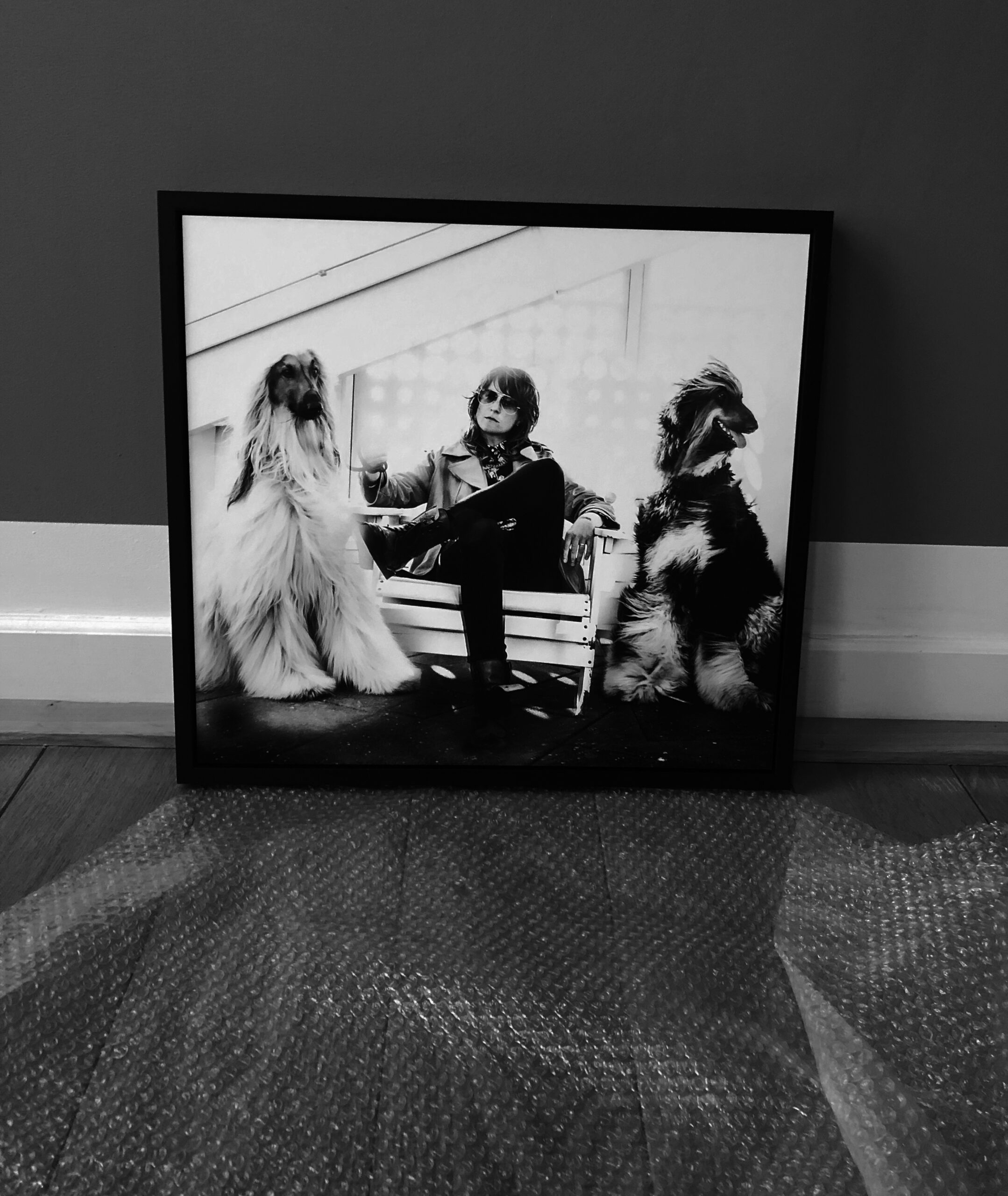
Sabrina (1986, The Netherlands) is a photographer and multidisciplinary artist whose practice arises from a cinematic visual language in which light, shadow, and composition determine the emotional and existential character of her images. Each work begins as a drawing, through which she explores composition, pose, space, and the relationship between light and the human form before translating these studies into photography. Her work examines the human body as a carrier of memory, vulnerability, and transformation. Through sculptural compositions and a carefully considered visual language, her photographs explore the tension between vulnerability and desire, intimacy and distance, absence and connection. Light functions not merely as a visual element, but as an expressive and sculptural force that shapes the emotional depth of the image.
She graduated from the Royal Academy of Art (KABK) in The Hague. Early in her career, she developed a distinctive body of work in which fashion, music, and portraiture converged. Rather than treating fashion as image alone, she approached it as a language of self-expression and transformation. The poetry of Arthur Rimbaud—particularly his notion of Je est un autre (“I is another”)—became a lasting source of inspiration, shaping the philosophical and emotional foundations of her practice. This influence continues to resonate throughout her work, where carefully composed light, melancholy, and existential reflection come together in quietly powerful images.
She was appointed Artist in Residence at the Interuniversity Institute for Art History in Florence, where she conducted research into Renaissance drawing, anatomy, and the representation of the body in painting under the guidance of Prof. Dr. Michael W. Kwakkelstein. This period led to the development of Corpus Dei, a photographic series conceived and created across Florence, Rome, and Villa Adriana in Tivoli, drawing on the artistic legacies of Michelangelo and Caravaggio.
Corpus Dei was published as a bibliophile photobook by Lecturis, featuring a foreword by Prof. Dr. Michael W. Kwakkelstein and an essay by Sarah de Clercq. The book was launched at Sotheby’s Amsterdam during Amsterdam Art Week, accompanied by an exhibition of the series. The work was exhibited in Florence and later at the Ikonenmuseum, where the complete series was shown across six exhibition spaces, entering into dialogue with historical icons. The project received wide recognition and was featured in various Italian and international art and cultural publications.
Beyond Corpus Dei, her photographic practice has been presented internationally through two consecutive participations in the New York Photo Festival and exhibitions and art fairs across Europe, including PAN Amsterdam and PhotoFever Brussels. A significant milestone was the publication of her work in Corriere della Sera, one of Italy’s leading newspapers, alongside features in international cultural publications. Her practice was further acknowledged through an Honourable Mention from Fotomuseum Den Haag as part of the museum’s photography prize.
Alongside her broader artistic practice, Sabrina develops portrait series with artists from the contemporary music and cultural scene. These include a series of portraits of British musician and poet Peter Doherty, presented during her solo exhibition How Soon is Now? in Amsterdam and later published in GUP Magazine, the American avant-garde duo CocoRosie, consisting of Bianca and Sierra Casady, Italian musician and composer Giancarlo Prandelli, and French multidisciplinary artist, singer and performer Rahim Redcar. These artistic dialogues reflect her fascination with artists whose identity, body and expression converge — where the image becomes not merely a representation, but an encounter with a unique presence.
Sabrina is currently developing Contritio Cordis, an interdisciplinary artistic research project emerging from a photographic series of seventy-four black-and-white portraits created at the former psychiatric hospital of Volterra, Italy. The project expands into Intra Cordis, an immersive installation in which photography moves beyond the image itself and becomes a spatial and sensory experience.
The project has evolved through encounters with experts from different fields, bringing together artistic, philosophical and experiential perspectives that continue to shape and deepen the work. Through the development of Parlatorio, exploring the tension between voice and the impossibility of being heard; Intra Cordis, transforming photography into an experience of presence and recognition; and LENS, a space for encounter where observation gives way to human connection, the work investigates vulnerability, memory, displacement, loss of belonging and the human longing to be seen and recognized.